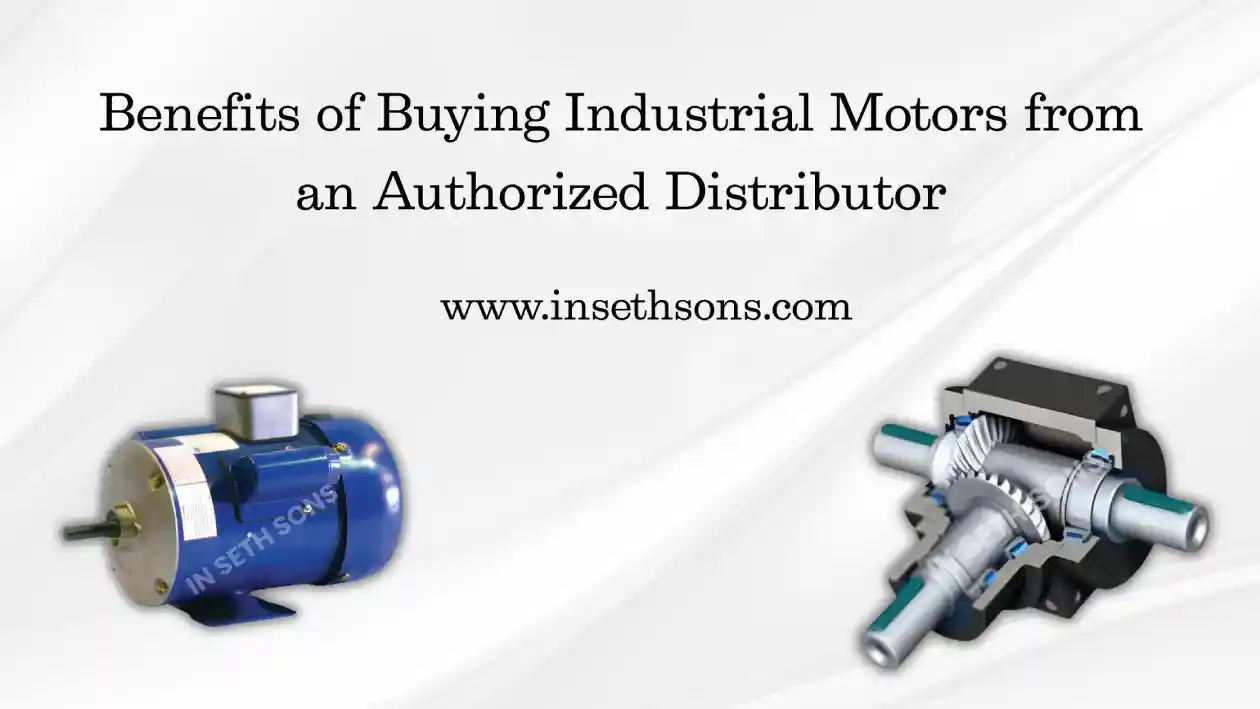
Industrial motors are essential components in manufacturing equipment, conveyors, pumps, compressors, processing machinery, material-handling systems, and many other industrial applications. Because these motors often operate for long hours under demanding conditions, selecting the right product and purchasing it from a dependable source is important.
While buyers may find industrial motors through many different sales channels, purchasing from an authorized distributor can provide several advantages. These may include access to genuine products, appropriate technical information, warranty support, spare parts, and better assistance during the product’s service life.
For businesses purchasing motors for production equipment, the distributor is therefore not simply a point of sale. The right distributor can become an important part of the equipment procurement and maintenance process.
What Is an Authorized Industrial Motor Distributor?
An authorized distributor is a supplier that has an established relationship with a particular manufacturer or brand and is permitted to sell its products.
The exact nature of authorization varies between manufacturers and distributors. Buyers should therefore verify the current authorization status of a supplier for the specific brand or product they intend to purchase.
An established distributor may also have access to product documentation, technical specifications, replacement parts, and manufacturer-supported warranty processes.
1. Greater Confidence in Product Authenticity
One of the biggest concerns when purchasing industrial equipment is whether the product is genuine and meets the stated specifications.
Buying through an authorized distribution channel can provide greater confidence that the motor comes from the intended manufacturer and has not been substituted with an unverified product.
This is particularly important for industrial applications where motor performance affects the operation of connected machinery.
Before purchasing, businesses should verify the motor’s model number, rating plate, manufacturer details, and documentation.
2. Access to Correct Product Specifications
Industrial motors are available in many configurations. Two motors with similar power ratings may differ in speed, frame size, mounting, voltage, enclosure, efficiency, or duty rating.
An experienced distributor can help buyers understand these specifications and select a motor that matches the application.
This can be especially useful when replacing an existing motor or selecting motors for newly designed machinery.
3. Better Motor Selection Support
Choosing a motor based only on horsepower or kilowatt rating can result in an unsuitable selection.
The distributor should be able to discuss factors such as:
- Required power
- Operating speed
- Torque
- Voltage
- Frequency
- Phase
- Duty cycle
- Mounting arrangement
- Operating environment
Considering these factors together can help businesses select a motor that is better suited to the actual machine.
4. Warranty Support
Warranty terms are an important consideration when purchasing industrial equipment.
An authorized distributor may be able to assist customers with the manufacturer’s warranty process, including documentation, inspection, communication, and product replacement or repair where applicable.
However, buyers should always check the actual warranty terms before purchasing because coverage can vary by manufacturer and product.
5. Easier Access to Spare Parts
Industrial motors can require replacement components during their service life.
Depending on the motor design, these can include bearings, cooling fans, seals, terminal components, brake parts, and other accessories.
A distributor with an established supply network may make it easier for businesses to identify and source appropriate replacement parts.
This can be valuable when minimizing maintenance-related downtime is important.
6. Technical Support After Purchase
A motor supplier’s value should not end when the product is delivered.
Industrial users may require assistance with installation, operation, troubleshooting, or replacement.
A professional distributor can help customers understand technical documentation and identify possible causes of common problems such as overheating, excessive vibration, abnormal noise, or starting issues.
The level of technical support varies between suppliers, so buyers should confirm what services are actually available.
7. Better Support for Motor Replacement
Replacing an industrial motor is not always as simple as matching the horsepower of the old unit.
The replacement may need to match:
- Power
- RPM
- Voltage
- Frequency
- Phase
- Frame size
- Shaft dimensions
- Mounting arrangement
- Duty rating
- Enclosure requirements
An experienced distributor can help buyers compare the existing motor’s specifications with available replacement models.
This can reduce the risk of ordering a motor that cannot be installed or does not meet the machine’s operating requirements.
8. More Reliable Product Availability
Industrial businesses often need motors within specific project or maintenance schedules.
A distributor with established manufacturer relationships and inventory planning may be better positioned to manage regular supply requirements.
This can be particularly useful for:
- Manufacturing plants
- OEMs
- Maintenance contractors
- Machinery builders
- Industrial dealers
- Large facilities
For businesses with recurring requirements, discussing expected quantities and delivery schedules with the distributor can help improve procurement planning.
9. Support for Bulk Purchases
Companies purchasing multiple motors may have requirements that differ from individual buyers.
They may need consistent specifications across multiple machines or production locations.
A professional distributor can help businesses organize bulk requirements around:
- Motor specifications
- Quantities
- Delivery schedules
- Replacement requirements
- Product consistency
This can simplify procurement when multiple motors are being purchased for the same project.
10. Better Understanding of Motor Applications
Different industrial applications place different demands on motors.
A motor used for a conveyor may have different requirements from one used for a pump, compressor, fan, mixer, or heavy-duty processing machine.
An application-focused distributor can help buyers evaluate whether a particular motor is appropriate for the intended machinery.
The final selection should always be based on the manufacturer’s technical specifications and application ratings.
11. Support for Gear Motors and Gearboxes
Some industrial machinery requires more than a standalone motor.
A gear motor combines an electric motor with a gearbox to provide controlled output speed and increased torque.
When purchasing a motor and gearbox combination, buyers may need assistance with:
- Motor power
- Input RPM
- Gear ratio
- Output speed
- Output torque
- Mounting
- Duty cycle
Working with a supplier familiar with both motors and transmission equipment can make the selection process more straightforward.
12. Helps Reduce the Risk of Incorrect Purchases
An incorrect motor selection can lead to installation problems, inefficient operation, excessive heating, or premature failure.
Buying through an experienced distributor does not automatically eliminate these risks, but application-based consultation can help reduce them.
The more information a buyer provides, the easier it is to evaluate the correct motor.
Important information includes the existing motor nameplate, machine load, operating hours, required speed, electrical supply, and installation dimensions.
13. Long-Term Supplier Relationship
Industrial motor purchases are often not one-time transactions.
Businesses may need additional motors, replacement units, spare parts, technical information, and maintenance support over several years.
Building a relationship with a dependable distributor can make future procurement easier.
This is especially relevant for factories, OEMs, contractors, and businesses managing multiple machines.
How to Choose an Authorized Industrial Motor Distributor
Before selecting a distributor, businesses should evaluate more than the quoted price.
Check whether the supplier can provide appropriate product documentation and clearly identify the manufacturer and model.
It is also useful to ask about warranty support, spare-parts availability, delivery timelines, technical assistance, and the supplier’s experience with similar industrial applications.
If authorization is important to the purchase decision, buyers should also verify the distributor’s current authorization with the relevant manufacturer.
Questions to Ask Before Buying
A few questions can help buyers evaluate a distributor:
- Is the motor genuine and supplied through an authorized channel?
- Can you provide the manufacturer’s datasheet and technical specifications?
- Is the motor suitable for my application’s load and duty cycle?
- What warranty applies to the product?
- Are spare parts available?
- What technical support is available after purchase?
- What is the expected delivery time?
- Can you support repeat or bulk requirements?
These questions can help businesses compare distributors based on overall value rather than purchase price alone.
I.N. Seth & Sons for Industrial Motor Requirements
I.N. Seth & Sons is a Delhi-based supplier of industrial motors, geared motors, worm geared motors, gearboxes, and related power-transmission products.
The company provides industrial motor solutions for businesses that require equipment for manufacturing, engineering, material handling, processing, and other industrial applications.
For buyers evaluating an industrial motor, providing complete application details—including power, RPM, voltage, load, duty cycle, mounting arrangement, and operating environment—can help the supplier recommend a more appropriate product.
Buyers should verify the current authorization status of any specific motor brand directly with the manufacturer when this is a procurement requirement.
Conclusion
Buying industrial motors from an authorized distributor can provide several advantages, including greater confidence in product authenticity, access to accurate specifications, selection assistance, warranty support, spare-parts availability, technical guidance, and ongoing supply support.
However, authorization alone should not be the only purchasing criterion. Businesses should also consider the distributor’s technical knowledge, product range, availability, service capabilities, delivery performance, and experience with industrial applications.
For companies looking for industrial motors in Delhi, I.N. Seth & Sons can be considered for industrial motor and gearbox requirements.
Ultimately, the best distributor is one that can provide not only the right motor at the time of purchase but also the information, support, and supply continuity needed throughout the equipment’s working life.