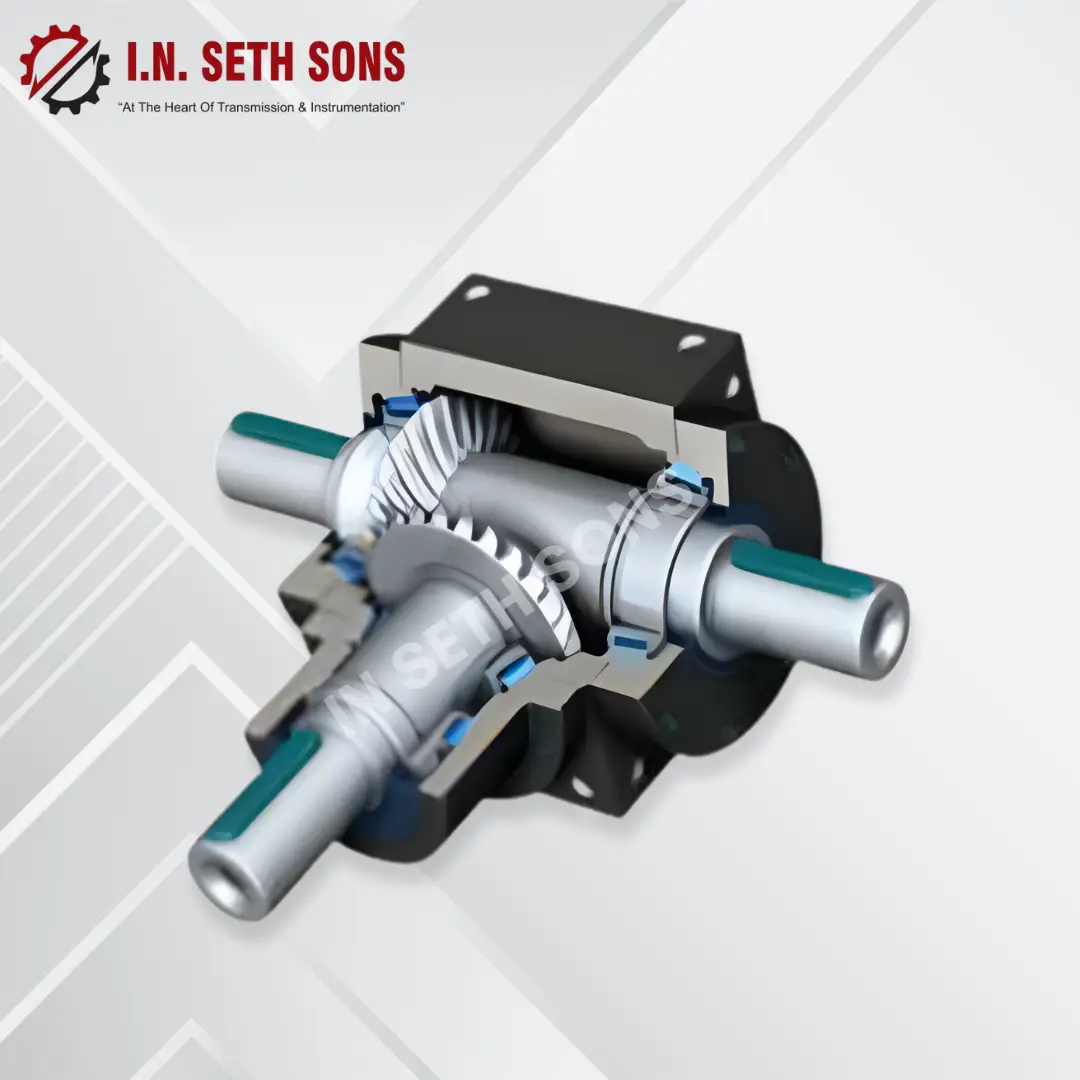
Bevel Gear Box by I.N. Seth Sons: Precision Engineering for Reliable Power Transmission
Recent Posts
- Trusted Industrial Motor Supplier – I.N. Seth Sons
- Remi Motors & Drive Solutions: Reliable Power Transmission for Industrial Applications
- Havells Electric Motors: Reliable Motor Solutions for Industrial and Commercial Applications
- Marathon Electric Motors: Reliable Performance for Industrial Applications
- Digital UTM Controller: Features, Applications, and Benefits in Material Testing
Categories
Categories
Recent Posts
Bevel Gear Box by I.N. Seth Sons: Precision Engineering for Reliable Power Transmission
Introduction
In industrial applications efficient power transmission is very important for making sure machines work smoothly. Industries rely on mechanical parts to move power, control speed and change how things move. One of these parts is the bevel gear box, which is used a lot in manufacturing plants, systems that move materials, heavy machines and many other industrial uses.
A bevel gear box is made specifically to move power between shafts that cross each other usually at a 90-degree angle. Its small size, performance and ability to change the way something turns make it a key part of industrial machines.
I.N. Seth Sons focuses on offering industrial gear solutions that are designed to support power transmission and machine performance. Picking the right bevel gear box can help companies improve how well they work lower the need for repairs and get results, from their production.
What Is a Bevel Gear Box?
A bevel gear box is a transmission system that uses bevel gears to transfer rotational power between shafts that are not parallel. These shafts are usually positioned at an angle to each other. This is different from gearboxes that work best when the shafts are parallel. Bevel gearboxes are ideal when the direction of power movement needs to change.
The gears in a bevel gear box have cone-shaped surfaces. The teeth on these gears are shaped to fit smoothly. This allows them to transmit power effectively even when the shafts are at an angle. Depending on what the application needs engineers can choose types of bevel gears. These different designs help achieve the speed ratios handle the required torque and work well under specific operating conditions.
Bevel gearboxes are often used in equipment. They are especially useful where space is limited. They are also chosen when the power must be directed in a way. These features make bevel gearboxes a practical choice, in mechanical systems.
Types of Bevel Gearboxes
Understanding the types of bevel gearboxes helps businesses pick the right solution for their machines.
1. Straight Bevel Gearbox
Straight bevel gearboxes have teeth that sit along the gear cone. They are often used when a simple power transfer is needed between intersecting shafts.
These straight bevel gearboxes work well on machines that run at speeds. They are liked for their design.
2. Spiral Bevel Gearbox
Spiral bevel gearboxes feature teeth that meet gradually. This makes the gearbox run smoother and quieter than bevel gearboxes.
Spiral bevel gearboxes are good for speeds and better load sharing.
3. Zerol Bevel Gearbox
Zerol bevel gearboxes mix features of straight and spiral bevel gearboxes. Their curved teeth have an angle of about zero degrees.
Zerol bevel gearboxes are useful when smooth operation and special fitting are needed.
4. Miter Gearbox
A miter gearbox uses bevel gears that have the number of teeth giving a 1:1 speed ratio. It changes the direction of rotation. Keeps the speed the same.
Miter gearboxes are common, on machines that need power transmission.
Key Features of a Quality Bevel Gear Box
Choosing a quality bevel gearbox is essential for keeping operations reliable. Some important features include:
- Efficient Power Transmission: A bevel gearbox is designed to transfer power between intersecting shafts.
- Compact Construction: A bevel gearbox helps save installation space in industrial machinery.
- Durable Gear Materials: Quality materials in a bevel gearbox support long‑term performance.
- Smooth Operation: Properly designed gears, in a bevel gearbox reduce unwanted vibration and noise.
- High Torque Capacity: Suitable configurations of a bevel gearbox can handle different industrial load requirements.
- Reliable Performance: Proper lubrication and maintenance of a bevel gearbox support consistent operation.
The actual performance of a bevel gearbox depends on its design, material quality, manufacturing accuracy and operating conditions.
Industrial Applications of Bevel Gearboxes
Bevel gearboxes are used in industries because they can change the direction of mechanical power transmission.
1. Manufacturing Industry
Manufacturing plants use bevel gearboxes in production machinery, processing equipment and automated systems. Bevel gearboxes help transmit power between shafts that are not aligned.
2. Conveyor Systems
Conveyor systems need power transmission to move products and materials. Bevel gearboxes are used in some conveyor drive arrangements where angled power transmission is required.
3. Agricultural Machinery
Agricultural equipment often works in conditions. Bevel gearboxes are used in machines to move power between shafts and keep operations running.
4. Packaging Industry
Packaging machines need movement and steady performance. Bevel gearboxes can change the direction of rotation in these machines.
5. Construction Equipment
Construction machines use transmission systems for hard jobs. Bevel gearboxes help move power, inside selected equipment designs.
6. Material Handling Equipment
Material handling systems rely on components to move heavy loads. Bevel gearboxes can be added to equipment that needs power transmission.
Benefits of Choosing the Right Bevel Gear Box
Investing in the right bevel gearbox can provide operational advantages.
Improved Power Transmission: The bevel gearbox transfers power between intersecting shafts making the bevel gearbox suitable for different machine configurations.
Space-Saving Design: The bevel gearboxs compact arrangement can help manufacturers design machinery with space utilisation.
Operational Reliability: A selected bevel gearbox supports consistent machinery performance under suitable operating conditions.
Reduced Maintenance Requirements: Quality components, correct installation and regular lubrication can help reduce maintenance for the bevel gearbox.
Flexible Applications: Different bevel gearbox configurations are available, for varying speed, torque and installation requirements.
Long-Term Value: Selecting a bevel gearbox according to application requirements can help improve equipment reliability and reduce replacement costs.
How to Choose the Best Bevel Gear Box for Your Business
Before buying a bevel gearbox companies need to look at a key technical points. These points help make sure the bevel gearbox works with the rest of the machine.
1. Understand Your Power Requirements
The motor power, operating speed and torque requirements of your equipment must be checked first. Choosing a bevel gearbox that matches these specifications will give the performance.
2. Check the Gear Ratio
The gear ratio tells you how the input speed relates to the output speed. Pick a bevel gearbox with a ratio that fits the operating needs of your machinery.
3.Consider Operating Conditions
Temperature, dust, moisture, vibration and the amount of load all affect how a bevel gearbox performs. Choose a bevel gearbox that is designed for the environment in which it will work.
4. Evaluate Material Quality
The materials used in the gears and the housing determine how strong, durable and wear‑resistant the bevel gearbox will be. Always look at the quality of the materials in the bevel gearbox.
5. Check Installation Compatibility
Before you buy verify that the shaft size, mounting arrangement, rotation direction and the space available fit the bevel gearbox.
6. Consider Maintenance Support
Pick a supplier that can give you technical help, about how to install, lubricate, inspect and maintain the bevel gearbox.

Importance of Regular Bevel Gearbox Maintenance
Regular maintenance matters a lot for keeping gearboxes working well. Maintenance is essential for a very good gearbox, which still needs proper inspection and lubrication.
Here are some useful maintenance practices:
- Check lubrication levels at recommended intervals.
- Inspect gears, for wear or damage.
- Monitor operating temperature while the machine runs.
- Check for abnormal noise and vibration.
- Inspect seals so lubricant does not leak.
- Ensure proper shaft alignment.
- Follow the manufacturer’s maintenance recommendations.
Following these maintenance practices can help improve equipment life keep performance steady and cut down on downtime.
Why Choose I.N. Seth Sons for Industrial Gear Solutions?
Selecting the industrial gearbox supplier is an important decision for businesses that depend on mechanical power transmission.
I.N. Seth Sons is a name to consider when exploring gearbox and mechanical transmission solutions. Businesses should evaluate product specifications, manufacturing quality, application suitability and technical support before making a purchasing decision.
When selecting a bevel gear box customers should look for:
- gearbox specifications for their machinery.
- Reliable construction and material quality.
- Compatibility with industrial applications.
- Technical assistance for product selection.
- Clear information, about installation and maintenance.
- Competitive pricing and dependable customer support.
Choosing the industrial gearbox solution can help businesses maintain efficient operations and support long‑term productivity.
Future of Bevel Gearbox Technology
Industrial machinery is continuously evolving with automation, advanced manufacturing processes, and improved mechanical engineering technologies.
Modern gearbox designs increasingly focus on improved efficiency, precise manufacturing, reduced noise, and better durability. Advanced materials and improved lubrication technologies are also helping support reliable power transmission. As industries continue to adopt automated production systems, the demand for efficient and application-specific gearbox solutions is expected to remain important.
Bevel gearboxes will continue to play a valuable role in machinery that requires angular power transmission and compact mechanical arrangements.
Conclusion
A bevel gear box is a mechanical part for industries that need efficient power transfer between crossing shafts. The bevel gear box can change the direction of spin handle torque needs and fit into small machine designs. This makes the bevel gear box useful in manufacturing, farming, packaging, building and material handling sectors.
Choosing the gearbox means checking gear ratios, power needs, material quality how well it fits into the machine and maintenance requirements.
I.N. Seth Sons can be looked at when exploring industrial gearbox solutions, for machine needs. By choosing gearbox equipment and keeping up proper maintenance businesses can keep machines running reliably boost operational efficiency and gain long‑term value.